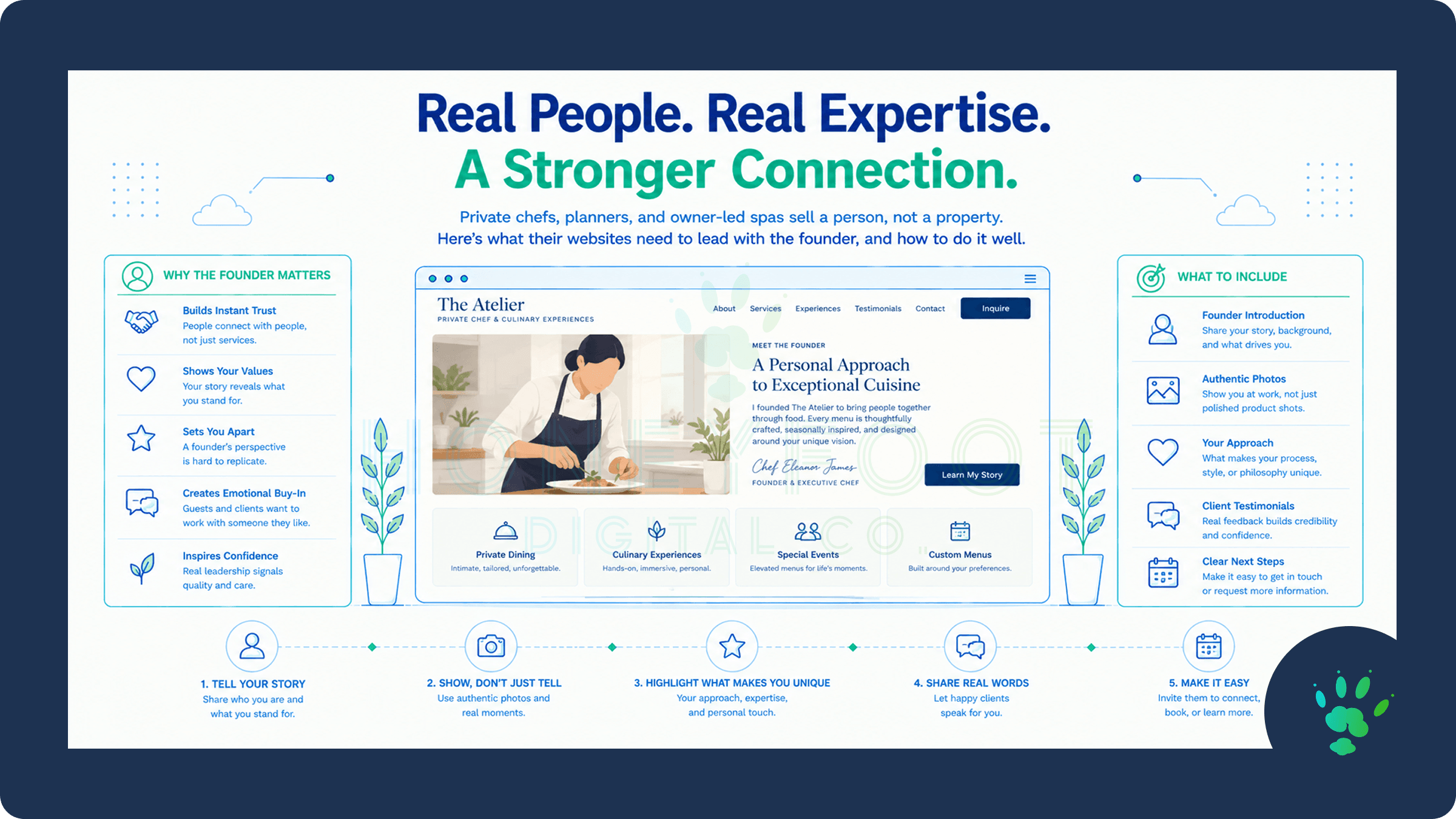
When one person carries the brand, the website has to carry that person.
A boutique hotel can build a brand around a building. A private chef, a wedding planner, or the owner of a small spa cannot. In these businesses the brand lives in a person, and that person's name, taste, and manner are what clients are actually buying. The service is delivered by someone specific, and every prospective client knows it before they ever reach out.
That fact changes what a website has to do. Most web design thinking assumes the brand is an institution: a property, a company, a logo. When the brand is an individual, the same templates quietly work against it. They flatten a distinctive person into a generic service page, and they ask visitors to trust a business before they have met the human being behind it.
This is the opening article in a series about designing for exactly that situation. The premise is simple. When the person carries the brand story, the website has to carry the person.
When the Person Is the Brand
Founder-led service businesses share a particular shape. The work is bespoke, the investment is considerable, and the buyer is placing something personal in someone else's hands: a wedding day, a milestone dinner, a household's daily rhythm, an hour of real rest. Hiring a stranger for that kind of work is an act of trust, and trust of that kind forms around people far more readily than around organizations.
Clients in this category rarely compare services on a feature list. They compare judgment, taste, and temperament. They are trying to answer questions that no pricing table can answer. Will this person understand what I mean when I describe the evening I want? Will they stay calm when something goes wrong? Do they care about the same details I do? The website is often where the first honest attempt at answering those questions happens, usually late in the evening, on a phone, well before any conversation takes place.
It also helps to name how the stakes differ. When a guest has a poor experience at a property, the property takes the blame. When a client has a poor experience with a founder-led business, the person takes it, and that person's reputation is the entire asset. A website for this kind of business is a representation of an individual's professional identity, and it deserves the care that implies.
Where Property-Led Thinking Falls Short
The approach that suits a luxury property rests on a different logic. As explored in why luxury hospitality and service businesses need a different approach to web design, the central task there is to sell an experience, reduce booking friction, and meet a higher trust threshold through photography, reviews, and a strong sense of place. Much of that carries over. Founder-led businesses also sell an experience, and they also face a high trust threshold.
What does not carry over is the center of gravity. A property can be photographed without a person in the frame, and its website can speak in the collective voice of a team. A founder-led business that does the same gives up its strongest asset. Phrases such as “passionate team” and “tailored experiences” could describe anyone, and for a business whose entire value is that it is distinctly not anyone, that sameness is expensive. Visitors cannot tell what the work will feel like, so they fall back on the only comparison left, which is price.
The About Page Is Not an Afterthought
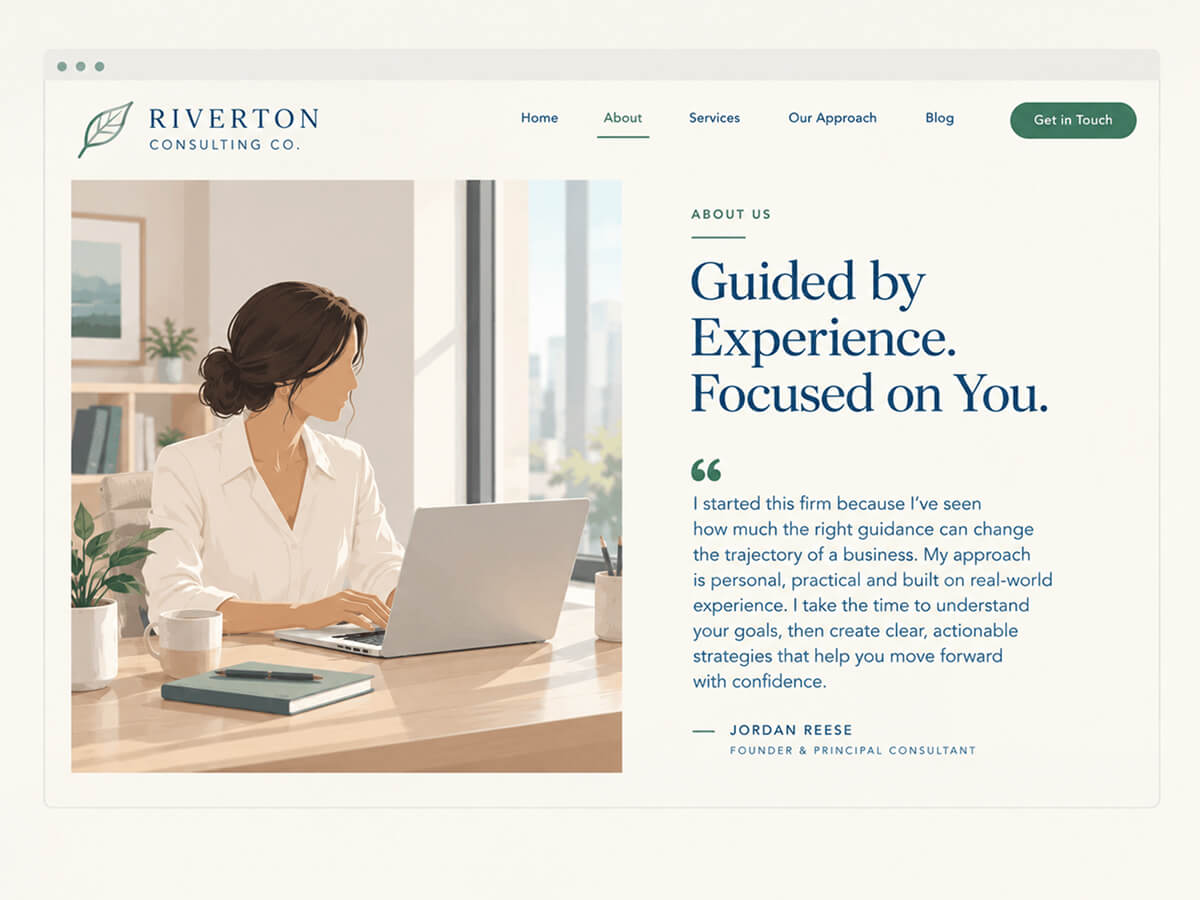
On most business websites, the about page holds a company history that few visitors read. In a founder-led business it is frequently one of the most visited pages, because it is where prospective clients go to decide whether they want to work with this particular person.
A strong version does not read like a résumé. It leads with a point of view: how the person thinks about the work, what they refuse to compromise on, and what a client can expect from the way they operate. Background belongs there too, but as evidence for that point of view and not as a chronology. A planner's years in hotel operations matter because of the instinct for pacing they built, and a chef's training matters because of the way it shows up on the plate. The reader should finish the page with a sense of the person and not only a list of credentials.
Photography and voice do much of this work. A portrait that shows the person at work, in the setting where they are most themselves, communicates more than a studio headshot against a neutral backdrop. Copy written in the first person, in the way the founder actually speaks to clients, carries a warmth that a third-person biography cannot. The goal is recognition. A prospective client who later meets the founder should feel they already know them a little.
Credibility That Belongs to One Person
Trust signals take on a different shape when one person stands behind the work. Harvard Business School Online's guide to personal branding defines it as the intentional, strategic practice of defining and expressing your value. HubSpot's guide to personal branding adds that audiences increasingly look for content that represents a person rather than a company. For a founder-led business that is not an abstract idea. It is a working description of what the website is for.
The credibility signals covered in building website trust beyond social media icons still apply, including testimonials, press, and visible proof of results. In this category, though, they work best when they are tied to the person. A testimonial that names the founder and describes what it was like to work with them does more than one that praises “the company.” A description of a past engagement that explains the founder's decisions shows how they think. Credentials, memberships, and recognition read best as chapters in one continuous story and not as a row of logos.
Consistency matters as much as any single signal. The same HubSpot guide cautions that bursts of activity followed by long silences damage credibility, and the point extends to a website. A site whose last update predates the founder's current work, or whose portfolio shows a style the person has moved beyond, undersells them. For someone whose reputation is the business, an out-of-date website is a statement about attention to detail.
Showing the Work Without Losing the Person
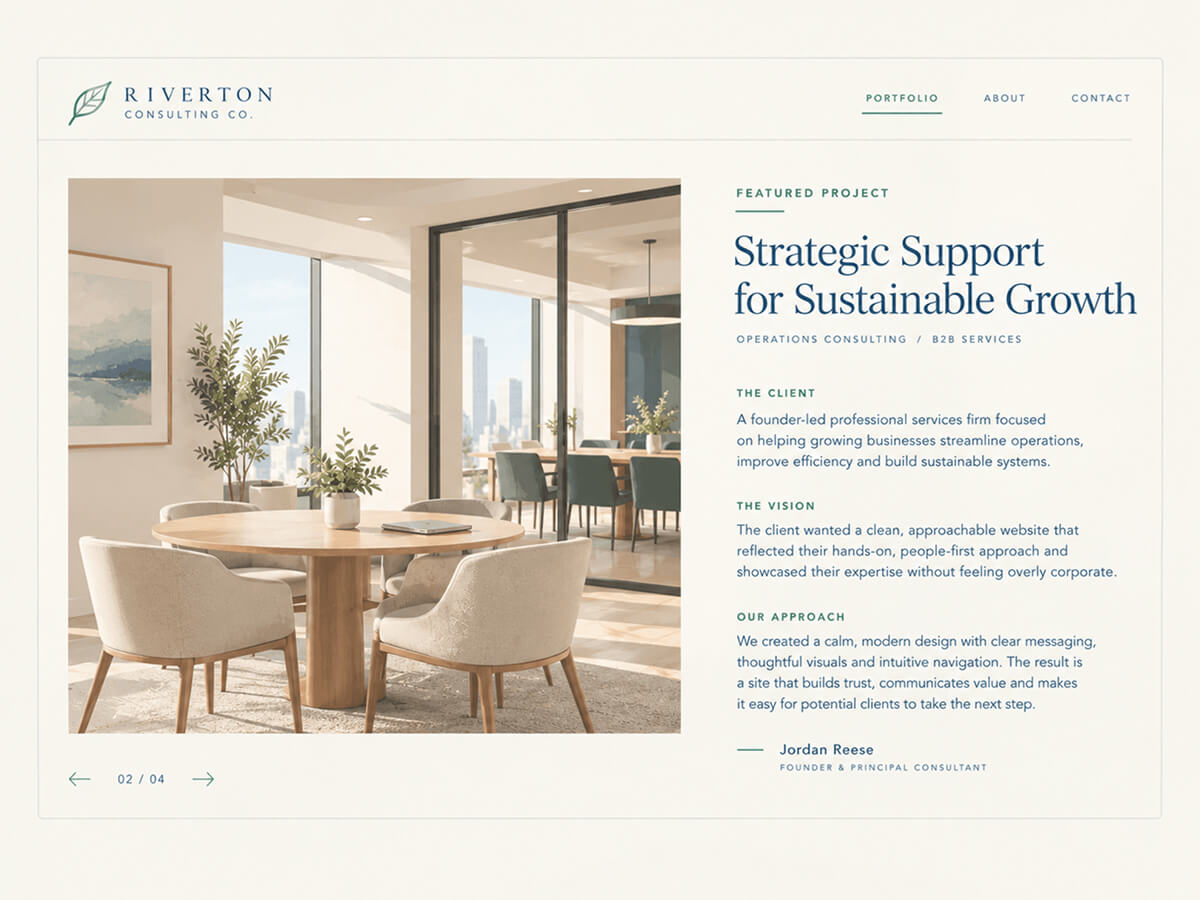
Portfolios in founder-led businesses carry a particular tension. Clients want to see the work, and they also want to see that the work reflects the person they will be dealing with. A gallery of excellent images with no point of view attached shows the first and not the second.
The stronger approach pairs each piece of work with a short account from the founder: what the client wanted, what decisions shaped the result, and what the founder is proudest of. A wedding planner might describe how a rain contingency became the most memorable part of an evening. A private chef might explain how a menu was built around one family's history. These accounts are brief, but they let a visitor see judgment in action, which is what they are really evaluating.
Discretion deserves attention here. Clients in luxury service categories often value their privacy, and a portfolio that shows too much, or shows it without permission, can undermine the very trust it is meant to build. Agreeing in advance on what can be shared, and sharing it with taste, is part of the service, and the website should reflect that.
An Inquiry Path That Feels Like Meeting Someone
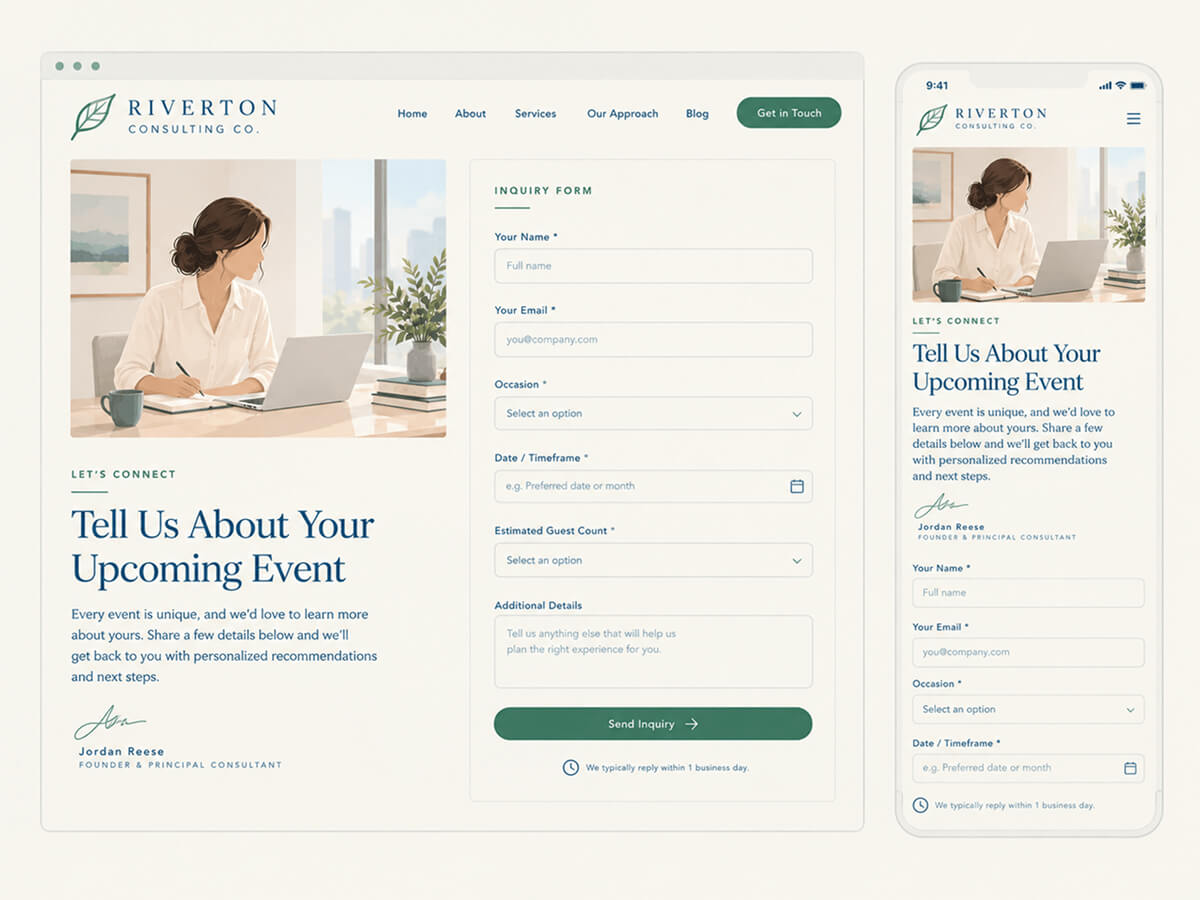
Contact forms built for institutions ask for a name, an email address, and a message. For a founder-led business, the inquiry is the first step in a relationship, and it should feel like one. A short, warm introduction from the founder above the form, a clear note about how soon they reply, and a few well-chosen questions about the occasion or the need make the exchange feel like the start of a conversation and not a ticket in a queue.
The questions matter. Asking about date, scale, and what the client hopes the experience will feel like helps the founder prepare, and it shows that the business works from the client's priorities. Keeping the number of fields modest preserves the ease that busy buyers expect. The principles that make hospitality booking flows convert, such as reducing friction and building reassurance at the point of commitment, apply here too, adapted to a service where the founder replies personally.
A Website That Works Beyond the Founder's Calendar
Founder-led businesses face a ceiling that larger operations do not: one person's time. A site that generates more inquiries than the founder can serve does not help, and a site that implies availability the founder does not have creates disappointment. Good design accounts for this from the start.
That can mean being candid about how many clients the business takes on in a season, inviting inquiries well ahead of peak periods, or offering a waitlist for popular dates. It can mean structuring services so the founder's time is used where it matters most, with formats that suit different needs and budgets. In these businesses, limited availability is not a marketing device. It is a true feature of the work, and presenting it plainly reinforces the premium nature of the service.
There is a longer horizon to consider as well. Many founders eventually want a business that does not depend entirely on their personal presence, with associates who join, a studio that grows, or a brand that can one day be handed on. A website built only around the founder's name can make that transition difficult. Building the site so the founder's voice leads while the structure can welcome a team later protects the business's future.
The gap between how good a business is and how it appears online, described in the real reason your business looks smaller than it is online, is often widest for individuals whose talent is obvious in person and muted on screen. Closing it is less about adding more and more about letting the right things come through clearly.
A Website That Sounds Like the Person Behind It
The founder-led business has an advantage that larger competitors cannot manufacture. A real person, with real taste and a real point of view, is the thing clients came looking for. The website's task is to make that person easy to find, easy to understand, and easy to trust, and then to make the first conversation easy to begin.
The articles that follow in this series take up the details: how to present a founder visually, how to write in a voice that is recognizably theirs, how to handle packages and pricing, and how to manage demand responsibly. The foundation is the one set out here. When the person carries the brand, a website that carries the person is how the business shows up at its best.
Does your website introduce the person your clients are actually hiring? If it reads as though it could belong to anyone, that is usually the answer. Whether you're a chef, planner, or concierge whose work is far more distinctive in person than online, noticing that inquiries arrive with questions your site never addresses, or simply ready for a presence that looks and sounds like you, let's have a conversation that starts with how your website represents the person behind the business. From there, a site that earns the same trust you do in person is well within reach.
Sources and Further Reading
HubSpot: Personal Branding: What It Is, Why to Do It, & How I'm Building Mine